
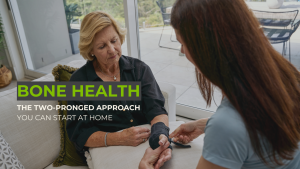
Bone density is not just an ‘older person thing,’ it affects YOU.
In fact, it affects everyone. With the natural shifts in muscle mass and bone density that happen with age, bone health is an issue that we all need to be thinking about.
Bone health is something of us women think about as we age, but it’s not always clear how to maintain it effectively. The good news? Supporting bone density doesn’t have to be complicated, and there are small, simple things you can do at home that really make a difference.
Bone loss can begin earlier than you think, especially through menopause, when hormonal changes significantly impact bone density. As we age and hit our 40s, bones can quietly lose strength without obvious warning signs.
The good news is that the right training can absolutely influence this trajectory and help you stay strong, capable, and confident long term.
The two-pronged approach to building bone
Building strong bones isn’t just about one type of exercise, it’s about combining impact and resistance:
- Impact (short, sharp bursts): Activities that give your bones a bit of a jolt stimulate bone growth more effectively than steady, low-impact exercises like walking. Think small jumps in place, stomping, or little hops, done in short bursts (for example, 10 jumps, rest, repeat). These micro “impacts” are surprisingly effective at activating bone-building processes.
- Resistance (weight-bearing strength): Lifting weights or using resistance bands adds another layer of stimulus to your bones. Heavy resistance helps bones adapt to load and maintain density. While you can start some resistance work at home, guidance from a physiotherapist or trainer can make sure you’re lifting safely and effectively.
Why walking isn’t enough
Walking is great for cardiovascular health, but it’s too gentle to stimulate significant bone growth. Bone responds to load and impact, so short, sharp bursts and resistance work are the key components for maintaining and improving density.
Practical tips for home
- Start with micro-bursts: 10 jumps or stomps at a time, 2–3 sets, a few times per week.
Combine with resistance: bodyweight exercises, bands, or guided weight training. - Focus on consistency rather than long sessions: Short, regular bursts are more effective.
Always start slowly if you have existing bone concerns and consider getting professional guidance.
Important disclaimer:
If you have low bone mineral density or osteoporosis, these exercises may be too much for your bones. Always start with a professional assessment before attempting impact or heavy resistance exercises to ensure safety and effectiveness.
Bone health is a lifelong investment, and small, targeted actions now can make a huge difference later. By combining impact and resistance, you’re giving your bones the stimulus they need to stay strong, resilient, and supportive for the long haul.
If you need help deciding what the next best step forward for you and your bone health is, book an appointment with one of our expert team members today and start making steps for stronger bones. Book here!